

M.K. Gilroy Banner

Showing posts with label m.k. gilroy. Show all posts
Showing posts with label m.k. gilroy. Show all posts
Thursday, December 12, 2013


Sunday, December 8, 2013
how much do authors make?
With the number of author and reader friends I have, I thought a quick snapshot of how much money author's make would be fun and enlightening.
 Dana Beth Weinberg is analyzing the responses of five thousand authors to the Digital Book World and Writer's Digest Author Survey. To read her comments click here.

Monday, April 8, 2013
don't wait for the perfect time - or you'll never get anything done

Investors know that timing is everything - but they also know that no one gets timing right all the time. So they preach that successful investing is achieved through consistency and diversity over time. When the sun shines. Even when it rains cats and dogs.When the clouds are full of water, it rains. When the wind blows down a tree, it lies where it falls. Don’t sit there watching the wind. Do your own work. Don’t stare at the clouds. Get on with your life.Ecclesiastes 11:3-4 (The Message)
Of course someone bought Apple stock at the right time and got rich - but Forrest Gump was a make believe character. And none of the can't-miss stock tips I've received have made me rich. (Though I may just be listening to the wrong people.)
One of my kids asked me when I knew I was ready to have kids. The answer was simple; when Lindsey, my first child was born. Nothing but the miracle of birth could have prepared me for fatherhood.
Business plans are great. Outlines are wonderful. Planning, pondering, preparing, predicting, and other forms of prognosticating on what is the best path to take are necessary for success. And there are better times to make a move than others. But if we wait for the perfect time - or until we think we know when the perfect time is - we'll never act.
Phrases that show the importance of timing, like strike when the iron is hot, are insightful, but so is the simple adage that there is no time like the present. In Aesop's Fable of the ant and the grasshopper, the ant followed Solomon's advise to not stare at the clouds but work - get on with your life. Consistency over time.
Marriage. Kids. New home. New city. New career. New workout program. New endeavor. New habit. New attitude. New mission. New you.
Plan and ponder. But don't kid yourself that you can measure every cause and effect to the point of knowing the perfect time to act and do. The uncertainties of life and the Law of Unintended Consequences mean that even the very best plans get scrapped and rewritten once we start the journey. Doesn't mean the plans were bad. But it does remind us that the only test for whether something we want to do is possible is doing it.
So what's on your heart and mind these days? And what are you waiting for?
There's no time like the present.
Thursday, January 10, 2013
in praise of the napkin

For a writer, nothing beats a neat and orderly office; a
clean and clutter-free desk surface; a carefully constructed outline;
color-coded file folders with supporting materials that correspond with the
outline; a cup of coffee that never gets cold; a sophisticated sound system
that provides appropriate mood music that doesn’t put you to sleep but doesn’t
get you engaged enough to hum or tap your toes; a family that understands you
might be working even if you are at home; and as an extra hi-tech bonus, straight
from Star Trek, the “cone of silence,” to shut out distractions. (The “cone of
silence” might come from Get Smart.)
Did I mention a clutter-free desk surface and cup of coffee
that is always hot?
I can dream can’t I? Like most writers I have a day job.
Yours might be called mommy or insurance agent or teacher or preacher or
barista or lawyer or salesperson. The day job and everything else life throws at us makes creating an ideal writing space next to impossible. And if we’re honest, even if we had nothing to do but
write eight to ten hours a day, we would still probably have a cluttered desk
and certainly have to warm up the cup of coffee regularly.
Trying to suppress the reality that writing under almost any circumstances is
more than a little bit messy and chaotic—and living fully in the “paperless” digital
world—I think one of the almost forgotten but greatest tools for the moonlight
writer is the napkin. It actually doesn’t have to be a napkin; the
back of a church bulletin or an out-of-date business card or an envelope works
too. Even the ripped corner of a business report can work just fine—just make
sure the boss isn’t watching when you tear it up.
The point is this: Great ideas for starting or fleshing out
a short story or how-to or song lyrics don’t always come during dedicated writing time. Ideas are often serendipitous—floating into
our consciousness like a butterfly—there for a brief moment and just as quickly
gone.
You need a way to preserve your brainstorms when they come,
to be used when you do have time to write. A nice leather journal is great but
too restrictive and probably a sign you are trying to perfect a process that is
imperfect. I used to keep an electronic file called “Ideas” but it wasn’t
always accessible when I needed it, even if I do use Google Drive now. I’ve
texted and emailed myself from my Droid, but my thumbs aren’t quick enough to
keep up with brain activity. Notecards are ideal but they don’t fit in a front
pocket and I forget them anyway.
No. In the spirit of what writing is, herding ideas that run
every direction like a thousand over-caffeinated rabbits, I think the napkin is appropriate. It serves as a symbol of multi-tasking—who says writers
don’t get hungry?—and what is better for cleaning up messes?
Cherish your ideas when they come by writing them down on
the back of a napkin. And if you forgot to bring a pen, ask the waiter if you
can borrow hers or his!
_______
Mark Gilroy is a 30-year veteran of the publishing industry,
starting with a stint as sports writer for a city newspaper when he was in
college. His first two novels, Cuts Like a Knife and Every Breath You Take, featuring Detective Kristen Conner, have quickly garnered critical acclaim.
Sunday, August 26, 2012
self promotion: I wanna talk about me

So when promoting your activities - particularly with friends - particularly in the social media age we live in - how much is too much? not enough? orjust right?Be aware you will always get one of three responses:
Of course some argue the issue on moral grounds, pointing out that humility is a God ordained virtue and boasting is sinful. The counterpoint is that followers of God should be bold and believe in what they are doing; they ask the question, if you don't believe in yourself and what you're doing, who else should and will?
- Anything you say to promote yourself will be too much with some.
- Others sincerely want to know what you're doing.
- Still more aren't going to notice anything you say anyway - so who cares?
There is obviously no single answer. You can already read my mind on the topic. My typical response: the answer is yes and no, more and less.
Better go with your own comfort level, but know you can't control your intended responses no matter how careful or capricious you are. My simple counsel - as much a reminder to myself as a word to anyone else - is:
- keep a spirit of humility and sense of humor - your project is not the center of the universe or a matter of life and death for others - even if your cause is life and death.
- do not overdo it lest you become a nuisance - the rule of thumb for Facebook and other high relationship networks is three times a week; Twitter unlimited.
- same as general conversation, make sure you listen as much as you speak - do you know what others are up to?
- if you are on social media, at least in part, to promote something you are doing, be sure to return the favor to others.
- keep it "soft sell" as most people don't like to be pushed.
Thursday, August 2, 2012
book review: the long goodbye by raymond chandler

My latest binge included Jim Thompson's The Killer Inside Me, Kenneth Fearing's The Big Clock, James Ellroy's LA Confidential, James M. Cain's The Postman Always Rings Twice, Dashiell Hammett's The Maltese Falcon, and two books from Raymond Chandler.
Particularly with Ellroy, Hammett, and Chandler, their anti-hero heros are troubled, rebellious, and cynical - but can't ever escape from that ember of honor and hope smoldering deep inside. The authors paint a dark, bleak picture of the underbelly of society - usually LA. Why LA? Why not LA? Where the lights shine brightest the shadows cast deep and wide.
Their outlook was shocking when they wrote their novels - especially Thompson when he wrote from the killer's perspective - but is standard fare today. (Today, you might need to write with a positive buoyancy to shock people!)
I still read crime novels, but I'm not sure anyone has really bested the patron saints, Hammett and Chandler. That begs the question, who had the greatest character? Was it Sam Spade or Philip Marlowe?
I like both characters - but Marlowe is my favorite and I believe he was at his best in The Long Goodbye - which just edged The Lady in the Lake in my mind.
Marlowe befriends Terry Lennox - wealthy but haunted by his demons from serving in war and by the escapades of his nymphomaniac wife. No good deed goes unpunished and soon both the cops and the gangsters are after Marlowe when he begins to investigate the death of Lennox's wife after being told to back off. Telling Marlowe to back off is like pouring gasoline on a fire.
Rereading Chandler is a graphic reminder that California has always had problems - and a guilty pleasure from an era of tough guys, dames in distress, partnerships between the gangsters and dirty cops, and the discovery that even heros have flaws.
__________
Mark Gilroy is author of the critically acclaimed novel Cuts Like a Knife. A 30-year veteran of the publishing industry, he has served as publisher and executive vice president at several companies and currently runs a company that services retailers, publishers, ministries, and other organizations in the industry.
Tuesday, July 3, 2012
Monday, June 25, 2012
the golden rule of twitter - and back rubs

Whether you are on Twitter to entertain, network or sell something, how in the world do you gain followers and then get them to read and share your tweets?
If you follow someone on Twitter and they don't follow you back, you are a fan. If they follow you and you don't follow back, you have a fan.
For most people the "fan" model doesn't really work.
Most of the 500 million of us on Twitter aren't going to command a huge fan base based on setting up an account with our name or a clever penname and posting some tweets - and once you follow 2,000 people, you have to have at least half that many followers to follow more.
So most of us need to follow the Golden Rule of Twitter.
It just so happens that the Golden Rule of Twitter is very much like the Golden Rule that Jesus spoke of in the Bible: Do to others as you would have them do to you (Luke 6:31, NIV).
If you want follows, mentions, and retweets - yes, by all means, make your account and tweets as good as possible - but the more certain route is to follow, mention, and retweet others yourself.
People appreciate fair play and will respond in kind. Sometimes it's nothing more than quid pro quo - but why shouldn't a social network be based to some degree on mutual back rubs?

Monday, June 11, 2012
10 ways google can help you as a writer

I'm not getting paid by Google to write this and I use a variety of production tools besides Google - some more helpful than the Google counterpart. But just familiarizing yourself with the array of Google products can add productivity to your work as a writer. Here are a few obvious and not so obvious ways that Google can increase your productivity and quality as an author.
1. Docs. Upload and share working document with peer review groups, co-writers, editors, publishers, and anyone else you are asking to make your writing better. Google Docs will soon become Google Drive with more space and features.
2. Calendar. The obvious use of Calendar is time management - and I also use it to sync my appointments between devices - but I also found it incredibly helpful to create a calendar while writing a novel to keep track of days, weeks, and months for the events in my storyline.
3. Maps. Want to add authenticity to the addresses, streets, cities, and other places in your writing - Maps even has pictures of the landmarks at street level.
4. Blogger. An easy way to set up an author website with simple push-button publishing. I've used it for years and recommend it - though I know many authors like WordPress better.
5. Youtube. Set up a channel to serve as home for your video blogs to promote your book. I use Youtube as the source for my vlogs on this website.
6. Translate. Want to add some phrases in another language to your book? Translate is an unbelievably easy and valuable tool to use. Now includes 50 languages.
7. Web Search. I never felt the need to switch to Microsoft's Bling. Maybe it's better but I find that hard to believe. No one has helped more people find the information they are looking for faster and more accurately than Google Search. You have an entire library at your fingertips.
8. Groups. Create mailing lists and discussion groups to promote your writing or interact with like minded creators. This feature might be falling behind and fading fast - but I predict they replace it with something rivals the leading apps in the near future.
9. Specialized Search. Did you know that Google has tools to help you examine search trends - content of blogs - content of scholarly papers - and more? They do.
10. Analytics. Keep track of what and how people follow your v/blog. And as a bonus "code" - if you have a huge online following, you don't want to be without Google Ads to generate income from page views. It takes an enormous amount of page views to add up - but better to set it up early in your online writing career.
You can use iGoogle as your homepage and set up your Google apps - and other apps - just the way you want to see them as on online dashboard.
Google has a great array of products that can help you focus on what your best at, maximizing the value you deliver. And whether your prefer other tools over one or more Google apps, their suite will at least alert you as to what is available to make your work easier and more focused.

Mark Gilroy's debut novel, Cuts Like a Knife, is in the market and is available in print and ink, as an e-book, and as an audio book. Check out reviews or purchase now. On October 23, 2012, the second Kristen Conner novel, Every Breath You Take, releases.
Friday, June 8, 2012
Wednesday, May 2, 2012
when can an author quit the day job and write full-time?
A week after Cuts Like a Knife hit the market I had a neighbor ask, "when can an author quit the day job and write full-time?" I got the same question from two authors within days. Here is a quick glance at the numbers that helps anyone that wants to start a new enterprise count the cost - I picked a salary with an easy monthly number and then walked authors through the royalty process. Enjoy!
Monday, April 9, 2012
Wednesday, March 28, 2012
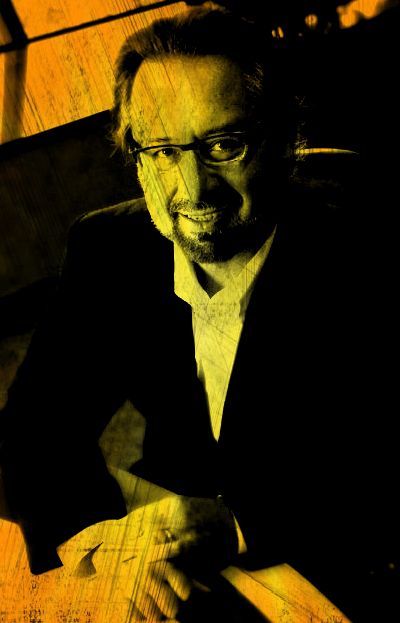
Tell us a little about yourself.
I am the father of six great kids - with just one left in the house now. Oh - wait - one came back after college graduation - so there's two around here somewhere. I've spent 30 years in publishing - from packing boxes, writing articles and curriculum and ad copy, editing and managing editorial departments, creating marketing plans and directing art design, and finally serving as exec vp and publisher for three companies. I love book publishing! I'm president of the Ravenwood High School track program (contributions welcome) and participate in our football boosters as well. I freelance publish for retailers, publishers, ministries, and businesses. My lovely wife Amy and I live in Brentwood, Tennessee, and attend Brentwood Baptist Church.What was your motivation behind this project?
I have always loved character driven mystery and suspense. From the Hardy Boys in grade school, to James Bond and Sherlock Holmes and Nero Wolfe in my teen years, then on to spy thrillers by Deighton and LeCarre in college, and then discovering a plethora of great mystery thrillers from Hillerman, Block, Grimes, Child, Leonard, Mosely, Crais, Silva and a host of other great writers throughout my adult life. I even went through a crime noir faze where I had to reread everything from Chandler and Hammett - The Long Goodbye was the creme dela creme. I can't forget Graham Greene. The common denominator? Great lead characters. I've spent 30 years in publishing and have a couple graduate degrees, but the best training I've received to pen my debut mystery thriller comes from the sheer volume of great books I've read - and not just thrillers, even if they are my default fiction genre.What do you hope folks will gain from this project?
I had a tremendous amount of fun writing Cuts Like a Knife - and count it as a tribute to the writers who have brought me so much enjoyment as a reader. I hope readers fall in love with my lead character, Detective Kristen Conner, in the same way. She's tough and in-your-face. And she's a fragile mess. She loves God, her family, the Chicago Police Department - her dad was a cop - and anything you put on her plate. Doesn't mean she gets along with all parties mentioned above - except the food. Kristen also has a secret - but don't expect me to tell you what it is for at least a couple of books!
I did my best to write a great thriller that has all the twists, turns, and suspense readers love. The fact that my character is such a "graceful mess" to watch in action should make the experience even more fun - I've been told by reviewers that there are some real laugh-out-loud moments. I think there will be deep appreciation for Detective Kristen Conner's simple and honest faith.How were you personally impacted by working on this project?
I earned quite a few frequent customer awards from Starbucks while writing Cuts Like a Knife. I wrote early morning and late night so I could do the day job. But I've never been one for a lot of sleep anyway! I do feel a sense of gratitude from the critical response to Cuts Like a Knife.Who are your influences, sources of inspiration or favorite authors / artists?
See above! LOL. Let's just say I like a great plot as much as the next person - but the writer that creates a wonderful character is the one I read over and over. Probably my favorite character over the past 10 years has been Daniel Silva's Gabriel Allon. The author that inspired me to try and write a Christian character into a general market mystery was Tony Hillerman. His character Jim Chee is a deeply religious and self-reflective Native American - his faith is part of his inner dialog as he solves crimes on the Navajo Reservation.Anything else you'd like readers to know?
When books don't do very well you often hear an author complain that his publisher didn't do very much to get behind and promote the book. Having been a publisher I know there are a lot of factors. I've personally worked hard on some books that never caught on - and basically spectated as some others have taken off in the marketplace. But what I can state very boldly is that my friends from Worthy Publishing have done a tremendous job bringing Cuts Like a Knife to market. They hired Jeane Wynne as publicist and she has performed miracles securing reviews from periodicals like USA Today and Publisher's Weekly for this first-time novelist. If Cuts Like a Knife should fail commercially the fault will be all mine. However, I think we have something special here. The Worthy leadership team has somewhere around 170 years of combined experience in publishing. I've asked Byron, Jeana, Kris, Rob and others who holds seniority - but no one will claim most years of service.
Tuesday, March 13, 2012
Saturday, March 3, 2012
Wednesday, February 15, 2012
Wednesday, February 8, 2012
Tuesday, January 31, 2012
Friday, January 20, 2012
Thursday, January 12, 2012
Subscribe to:
Posts (Atom)