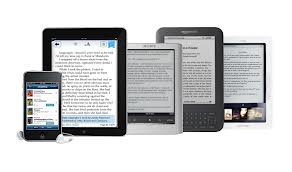
I have been in the publishing industry for almost 30 years now. Everyone knows that electronic production and delivery will shape the future of the book publishing industry - and most suspect that the future is now. So that's the main reason I finally bought an ebook reader - to be less technologically behind in the work that provides room and board for the family. If you're going to consider yourself an active member of the "long form" publishing world, better at least be aware of the mechanics - or electronics - of the digital book experience, I figured.
The final nudge I needed to order the Kindle was an impending trip to China last month. Anticipating 18 hours in the air each way, I wanted to make sure I had plenty to read without packing a stowage trunk. Sure enough, the Kindle worked like a charm on that trip. I downloaded four or five books at New York's JFK Airport, boarded the plane, ate dinner, watched a movie, and then fired up a book I've been wanting to read. I was sleeping like a baby in fifteen minutes. It felt like home! (And yes, I did finish the book and two others while flying over the Pacific Ocean.)
After I told an author friend why I bought the Kindle, they let me know they were more interested in why it took me so long. Good question. Frankly, I've not been sold on buying an ebook reader in general, and the Kindle in particular, until now. I do like the feel of paper and ink bound inside a paper or board cover - but that's not what really held me back.
We all know that technological improvements take place so fast that version 2.0 of the newest gadget follows 1.0 by weeks, not months or years. I'm not a late adopter of new technology, but on the other hand, I don't want to be the one purchasing 1.0 at twice the price of 2.0, which will undoubtedly have more features and less problems.
So I waited for multiple powerhouse companies to launch new readers and for three million of my good friends to buy the first two iterations of the Kindle before I jumped in on the third wave.
But then came the next question from my author friend: why the Kindle over the iPad? It is hard to beat Apple for sleek and cool and seamless usability. And the iPad was all over the news and just about to sell its one millionth unit within months of its release when I bought the Kindle.
So here are my reasons for buying the Kindle over the iPad. (Perhaps I'll take up the question of why I chose it over the Sony Reader and Barnes & Noble Nook at a later time.)
1. I read books and there are approximately seven times more books available through Amazon's Kindle Store than are available for the iPad. The gap will close but is still significant.
2. The i-Pad costs three to four times more than the Kindle. I'm not saying the i-Pad isn't worth it. It looks to me like the iPad is the future of laptop computing and style. Apple and others will come up with a next generation device that is a cross between the laptop and the iPad, which will replace what I use now. But I don't need all the extra computing and bells and whistles that come with it. I've already got a MacBookPro. I just need a book reader. It isn't lost on me that most people I see with the iPad on airplanes aren't reading books, though to be fair, it looks like the magazine reading experience is much better than it would be with the Kindle. But the iPad users I see are more often watching a movie or playing a game, not reading a book. And as a confession, I get distracted easily enough in life. When I want to read a book, less is absolutely more.
3. The electronic type on the Kindle has now reached the same level of readability (and lack of eye strain) as the paper and ink book. When I took the Kindle out of the box I assumed there was a protective plastic film with a picture of a tree covering my screen. The saturation level of electronic ink was so rich and brilliant that I was surprised to discover it was the actual screen. (I'm glad I didn't give in to my impulse to grab a sharp object to lift an end of the "film" so I could remove it from the screen.)
4. The size of the Kindle is just about perfect for carrying in a briefcase or purse - though I wouldn't know firsthand on the purse - and the iPad is just a little too large as an "extra" device. As mentioned above, I don't think the Kindle can compete with the iPad on reading larger visual publications (and certainly not playing games or watching movies). And it's not just due to the smaller size. The Kindle is strictly black on white. So if I was in a different area of publishing - like fashion media or nature photography - I would undoubtedly purchase the iPad.
5. I also picked the Kindle because I can now use it to carry and read my own documents. This is not really a reason I picked it over the iPad because that is not and never has been a limitation for the Apple device. Let's just say that Amazon fixed something that they got wrong in earlier editions of the Kindle. Because it is a proprietary device tied to the Amazon Store, it used to be if you wanted to read a non-commercial-book document on the Kindle, you had to figure out how to upload it to the store and buy it from yourself there. I know one of the Big Five publishers bought all their employees the Sony Reader for this very reason - there were no limits on putting your own material on your reading device. The publisher wanted associates to experience an ebook reader
and distribute company material on it. That was too tough - and expensive - on the Kindle. Maybe a better of way of making this point is to say that Amazon removed a reason I had previously been resistent to buying their Kindle. I'm going to fly to Orlando later today. I want to review a manuscript I prepared for the meeting. Now all I do is convert it to a pdf and email it to my Kindle email address that they assigned to me when I bought the device. The document will be waiting for me on my Kindle in about a minute.
Those were my reasons for buying a Kindle. They may not work for you.
So who should buy the Kindle? Simple. Book readers. I don't think it's going to a good purchase for people who
want to read books instead of playing games but need a little extra motivation. But the iPad is obviously - and for more reasons based on around multi-use distractions - not going to do that either.
The early book publishing industry statistics say that book readers buy and read more books once they have an ereader. Why? There are no space-time limitations of having to drive to a brick and mortar establishment during open hours to pick up something that is on your mind right now. Just read a good review on your flight magazine? You can purchase the book in about 30 seconds once you land at O'Hare or Hartsfield, even if your connection is tight. (It should be noted that buying a book on a Kindle is not as pleasant as sipping a cup of coffee while strolling through rows of bookshelves at a bookstore - and will never replace that.)
As a final comment, Amazon offers a lot of public domain books for free at the Kindle Store. I was about to board a plane last week when suddenly a story from my childhood popped into my mind: Treasure Island by Robert Louis Stevenson. I looked it up and found a free edition, which I immediately "bought." It was waiting for me when I took my seat. I read the opening chapters and was flooded with a sense of nostalgia - right after I woke up from my nap. Just like being at home!